Journal 6: Trace Grendel’s philosophical journey in
Gardner’s Grendel using the cycle of astrology for clues. End this response by
stating Grendel’s evolved philosophy. In other words, what is Grendel’s philosophy
at the end of his narrative?

In
John Gardner’s Grendel, Grendel is a beast who is struggling to discover who he
is and why he is living. This monster is lonely and does not quite fit into the
Anglo-Saxon society as people find him to be appalling in appearance. While
traveling and growing up, isolated from the rest of the society, Grendel
develops philosophies on life and the world. Throughout the book, Grendel
matures through a philosophical journey, where he learns the cruel truths of
life and prejudices.
In
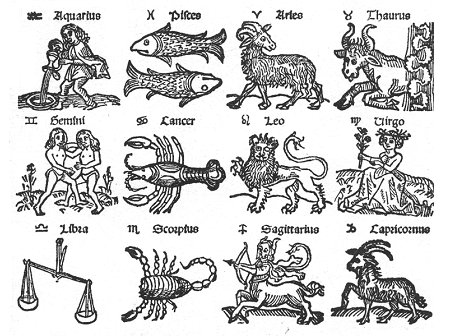
chapter one, of Grendel, “Aries the Ram,” Grendel is developing a world-view. Grendel
becomes disgusted towards the ram’s animalistic, mindless sexual urges but then
relents that he is no better than the animal as he does not feel he has any
significant purpose in life either. In this chapter, Grendel develops his point
of view of how the world works and how pointless it all is. In chapter two, “Taurus the Bull,” Grendel
adopts the philosophy of the Solipsist. Solipsism is the philosophy that
expresses the view that only the mind exists. Grendel even says “I exist;
nothing more,” when realizing the world is chaotic as the bull kept repeatedly
attacking him in the same fashion.
In
chapter three, “Gemini the Twins,” Grendel learns of the Shaper’s poetry and
believes everything he has to say. Grendel’s beliefs become heavily influenced
by the Shaper’s words, especially of what the Shaper has to say about Grendel’s
existence. The philosophy of sophism was described in chapter three as this philosophy
is thought capable of shaping the truth. However, Grendel soon discovers after
his years of observing the Danes that the Shaper’s words are fictional. In chapter four, “Cancer the Crab,” Grendel
learns from the Shaper that he is descended from Cain. Although the biblical
background of Cain makes Grendel associated with “evil,” Grendel is willing to
go along with this label just so he can feel he is a part of society.
It was not until
chapter five, “Leo the Lion,” that Grendel’s philosophies then shifted towards
Alfred Whitehead’s philosophy when speaking to the dragon. Whitehead’s
philosophy focuses on the concepts of life, organism, function, instantaneous
reality, interaction, and order or nature. While the dragon is a nihilist,
Whitehead and the dragon still agree that there is a fundamental connection
between all things and processes. In chapter six “Virgo the Virgin,” Grendel’s
philosophy for skepticism is adopted as he becomes distrustful against the
world. In this chapter Grendel accepts that he can never be part of society and
concludes that the people are his enemies. Up until this point, Grendel has
been trying to befriend the humans of Herot but after meeting the dragon and
giving up on the Shaper, Grendel gives up hope on the humans and become a
skeptic.
In chapter seven,
“Libra the Balance,” Wealtheow’s Christianity influences Grendel’s philosophy.
Grendel becomes exposed to Christian values, such as fellowship and communion.
He is also influenced by Wealtheow’s action of bringing harmony to Herot, a
place he felt needed peacekeeping. As Wealtheow is seen as a symbol for hope
and unity, Grendel is not used to such kindness and becomes attracted to her
innocence. Ultimately, Grendel did not know what to do and almost killed
Wealtheow but let her go at the last minute. In chapter eight, “Scorpio the
Scorpion” Hrothulf’s Machiavellian philosophy is adopted. This philosophy is
basically about the social and personality psychologists use to describe a
person’s tendency to deceive and manipulate others for personal gain.
In chapter nine
“Sagittarius the Archer,” Grendel tricks Ork into thinking he is the “Great
Destroyer.” Ork then tries to tell the other priests amongst him that he has
met and spoken to the great one. Ork would share that the King of Gods is the
ground for rationality, and that the ultimate evil is that time is perpetual
perishing, and being actual involves death. This means that death is
inevitable—with that being the ultimate evil in this world. At the end of
Grendel, John Gardner gives Grendel the philosophy of nihilism. In chapter ten,
“Capricorn the Great,” Grendel becomes a nihilist in the descriptive sense that
there is no longer any real substance, no traditional, no social, political,
moral, or religious values left. When it comes to John-Paul Sartre, Grendel
begins to think that man creates his own values; thus, everyone would have
different interpretations of values, right, and wrong.
Grendel creates his own
personal views of the world. Throughout the book, Grendel goes through a long
philosophical journey in twelve years, experiencing several different
philosophies, which eventually formed his philosophy before his death,
nihilism. As Grendel does not understand others, and they cannot understand
him, Grendel believes nothing exists but himself, as he only understands his
innermost thoughts. Grendel’s perception of the world around him shows readers
the development of his character and explains why he is how he is towards
humans’ prejudices and the cruelty of the world.

No comments:
Post a Comment